Hypertension is the most common chronic disease of industrialized societies,
particularly among the middle and old age groups. It is a major contributor to the development of cardiovascular disease,stroke and renal failure. The higher the systolic or diastolic pressure the greater the risk of coronary heart disease. Optimal pressure is systolic lower than 120mmHg and diastolic lower than 80. Normal 120-129/80-84. High normal 130-139/85-89. Above 140/90 is Hypertension. Though the cause of essential hypertension is not known certain factors are known to predispose to it. They are heredity, obesity, and the stress and strain of modern life. Recently we had a schoolboy of 17 years weighing 120 kgs. and diagnosed as having high BP during his school medical check up. We also see this as a common occurrence among young people working in corporate companies under high pressure. Vegetarians tend to have lower blood pressure compared to non-vegetarians. Reducing fat intake in the diet from 35% of total calories to 25% of total calories showed a slight reduction in the pressure. Weight reduction in the obese and sodium reduction in the diet along with regular walking for 30-40 minutes a day have been seen to have the most significant effect in lowering the BP. Besides this stopping smoking and alcohol consumption also have a significant effect.
Weight
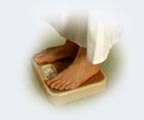 Every additional kg of flesh means that much extra area through which the blood has to be pumped and this further raises the BP. If you are over weight reducing your weight will definitely bring down
the BP too. If your weight is normal then make sure you maintain it for if you gain the weight the BP will go up too. A low calorie
and low fat diet with plenty of fresh fruits and salad is the answer. Every additional kg of flesh means that much extra area through which the blood has to be pumped and this further raises the BP. If you are over weight reducing your weight will definitely bring down
the BP too. If your weight is normal then make sure you maintain it for if you gain the weight the BP will go up too. A low calorie
and low fat diet with plenty of fresh fruits and salad is the answer.
Salt intake
The most important dietary restriction is one's salt consumption. Many of my BP patients when asked about salt restriction say I am
taking tablets for my BP so I don't bother to 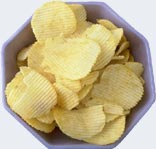 restrict
my salt intake. This is the reason for continued fluid retention. Fluid retention is very debilitating. It makes one very sluggish,
you not only want to avoid walking, it makes you very depressed. You feel like lying down all the time and this slows down your metabolism, which will make you put on weight and make you even more depressed. restrict
my salt intake. This is the reason for continued fluid retention. Fluid retention is very debilitating. It makes one very sluggish,
you not only want to avoid walking, it makes you very depressed. You feel like lying down all the time and this slows down your metabolism, which will make you put on weight and make you even more depressed. To restrict salt intake, avoid adding salt to food at the table, reduce quantity of salt in cooking and avoid the following foods on a regular basis -papads, pickle, chutney, mixture, namkeen, chips, chaat, bakery items as they contain baking powder and sodas and cold storage food as they have a lot of salt added as preservatives.
Fluids
 With
a free flow of urine, fluid restriction is not necessary. With water accumulation(edema) following heart failure, fluid intake should
be regulated according to the urine output. With
a free flow of urine, fluid restriction is not necessary. With water accumulation(edema) following heart failure, fluid intake should
be regulated according to the urine output.
Potassium Those on diuretic treatment for hypertension need to be conscious and concerned about potassium levels in the body. Potassium levels tend to drop due to losses which occur with the use of the diuretic and this must be consciously supplemented with the consumption of fruits rich in potassium like sweet lime (musambi) lemon and oranges on a daily basis. Atleast one or two musambi may be eaten daily at 11 am or 6 pm.
Alcohol
 Alcohol is a risk factor in high BP. If drinking daily, consumption should be restricted to 2 small drinks 30+30ml or only one glass of beer or wine. I would recommend that it is stopped completely or restricted to the above quantities only twice a week. Alcohol is high in calorie and also causes fluid retention which can shoot the BP up. Alcohol is a risk factor in high BP. If drinking daily, consumption should be restricted to 2 small drinks 30+30ml or only one glass of beer or wine. I would recommend that it is stopped completely or restricted to the above quantities only twice a week. Alcohol is high in calorie and also causes fluid retention which can shoot the BP up.
Smoking
 Smoking
has a very dangerous effect on BP. It raises the risk of a BP patient getting a stroke. Those who stop smoking completely see a remarkable effect on their BP and reduce the risk of complications like blocks in the arteries and having a heart attack or stroke. Smoking
has a very dangerous effect on BP. It raises the risk of a BP patient getting a stroke. Those who stop smoking completely see a remarkable effect on their BP and reduce the risk of complications like blocks in the arteries and having a heart attack or stroke.
Walking
 Regular
walking or aerobics exercises are a must as they improve the circulation, reduce the weight and relieve depression. Walking daily must become a habit like brushing teeth or bathing. 20 minutes is a minimum to raise your heart rate. I would say 30-45 minutes is the ideal. However if you are pressed for time or you have missed your regular walking time, don't not walk at all but do at least 20 minutes at another time, even late in the evening or half an hour after dinner is fine. Walk anywhere, at anytime but you must walk continuously for at least 20 minutes daily. We have seen that a 20-minute walk in the evening can be an excellent stress buster and relaxant. Many of our patients and dieters have achieved great results with a 20-30 minutes walk in the morning plus a 20-minute walk in the evening. This raises the metabolic rate twice in the day and has a tremendous effect in reducing BP, obesity and lipid and blood sugar levels. It also raises HDL levels which protect the heart. Regular
walking or aerobics exercises are a must as they improve the circulation, reduce the weight and relieve depression. Walking daily must become a habit like brushing teeth or bathing. 20 minutes is a minimum to raise your heart rate. I would say 30-45 minutes is the ideal. However if you are pressed for time or you have missed your regular walking time, don't not walk at all but do at least 20 minutes at another time, even late in the evening or half an hour after dinner is fine. Walk anywhere, at anytime but you must walk continuously for at least 20 minutes daily. We have seen that a 20-minute walk in the evening can be an excellent stress buster and relaxant. Many of our patients and dieters have achieved great results with a 20-30 minutes walk in the morning plus a 20-minute walk in the evening. This raises the metabolic rate twice in the day and has a tremendous effect in reducing BP, obesity and lipid and blood sugar levels. It also raises HDL levels which protect the heart.
|